

04 Apr How to Light Up Your Patio Without Overwhelming the Space
Lighting a patio can turn a tired outdoor corner into a welcoming spot for evening gatherings, quiet reading, or late night coffee runs, and many homeowners find that the right light makes outdoor time feel longer and more comfortable.
If you are looking to improve the atmosphere, there are a number of ways to do this without overcomplicating the layout or installing too many fixtures.
The challenge is to add brightness in ways that support activity and mood without creating glare or competing focal points that fight for attention. Small moves such as choosing lower lumen bulbs, fitting a dimmer on a primary circuit, or redirecting one or two fixtures will often change the whole feel more than adding a dozen lights.
Choose A Layered Lighting Scheme
Layering light is about giving the space several levels of visibility so one broad source does not dominate and flatten every surface, and the result feels balanced and easy on the eye.
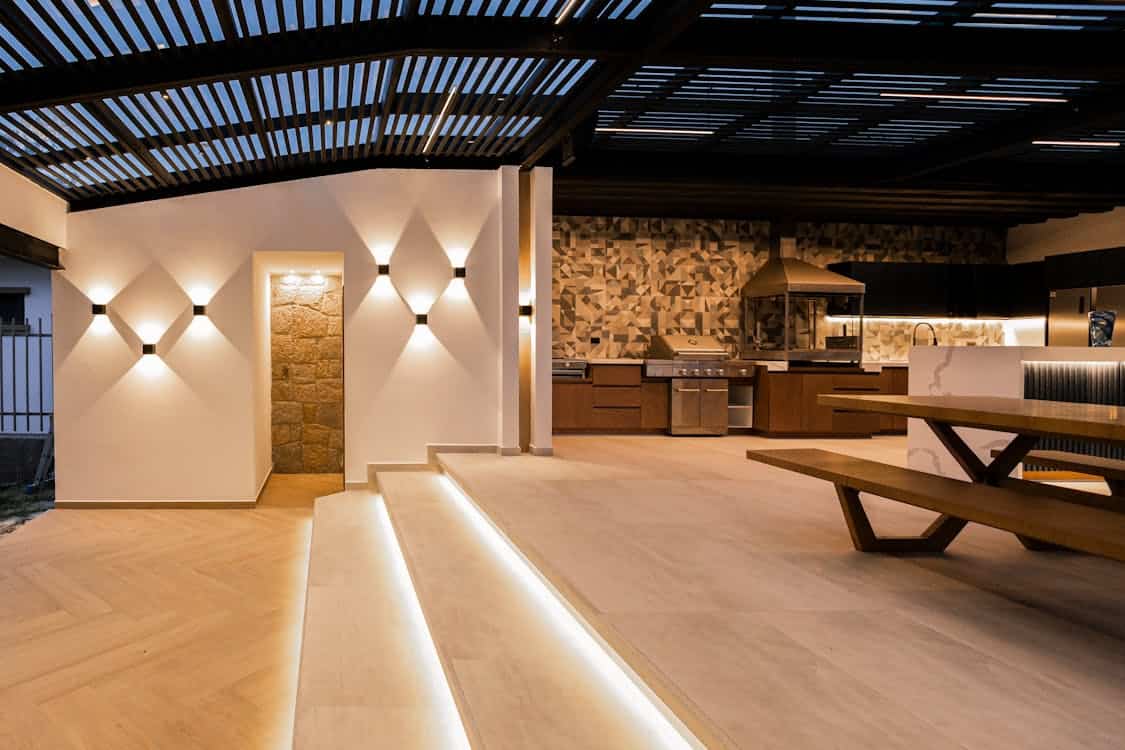
Begin with a soft background wash using recessed fixtures aimed at walls, low wattage bollards, or concealed strip lights so general navigation is comfortable without bright hotspots.
Add task light where activities take place, for example a pendant hung over a dining table at roughly one third of the table diameter from the ceiling, an adjustable lamp beside a lounge chair for reading, and brighter, focused fixtures near grilling and prep areas.
Finish by placing small accent points to pick out a textured wall, a stately pot, or a specimen plant so the eye has resting points and brightness is distributed rather than concentrated.
Mind Scale And Placement
A large pendant above a modest bistro set will overwhelm and shrink the feeling of an otherwise pleasant patio, so give scale equal weight to material and finish when you choose fixtures.
Match the diameter and drop of pendants to the table width, use flush mounts where clearance is limited, and prefer slim profile sconces along narrow walls so sight lines remain open and seating faces do not meet direct glare.
Place uplights at column bases to lift architecture gently and mount directional fixtures so beams wash walls rather than strike people in the eye while seated. Plan fixture locations around furniture groupings and walking paths so the light supports movement and conversation and does not force awkward rearrangement later.
Pick Warm Color And Soft Intensity
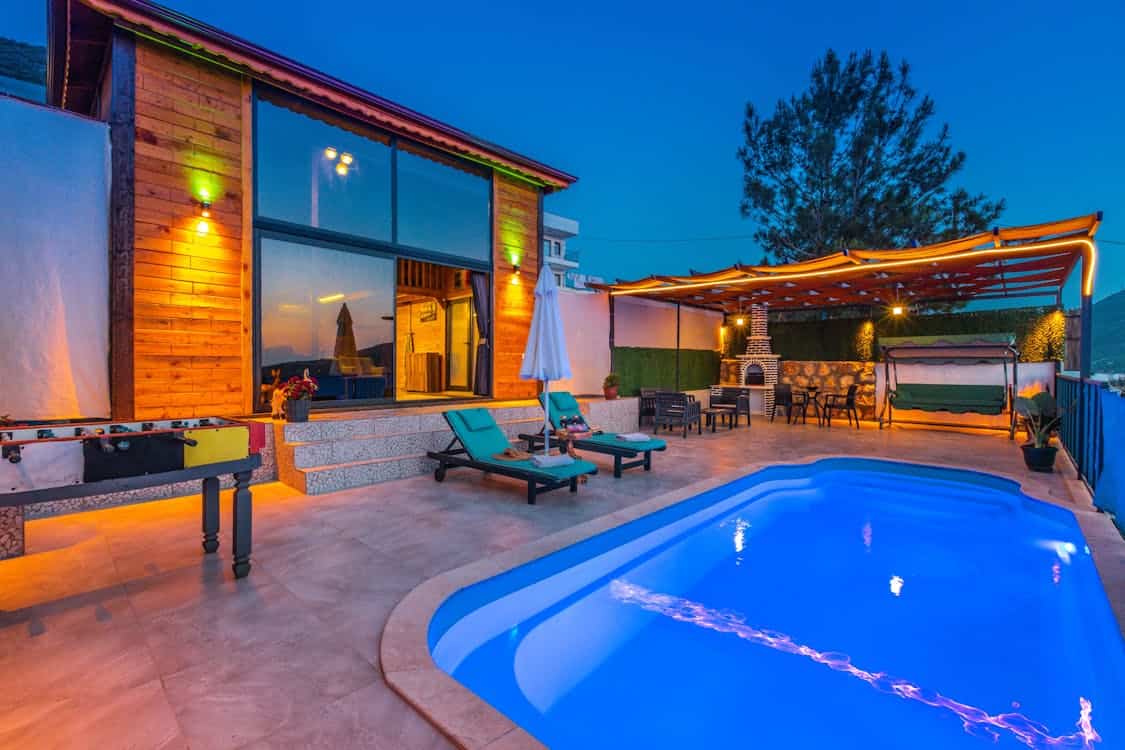
Warm white light tends to flatter skin tones and plant foliage and makes evenings feel inviting, so aim for bulbs in the 2700 to 3000 kelvin range rather than cooler temperatures that can read as clinical.
Keep overall lumen output modest, perhaps using 200 to 800 lumens for general fixtures and 800 to 1600 lumens for task points, so brightness is graded and contrast feels comfortable.
Use dimmers and layered sources so you can raise levels for a task or meal and drop them for relaxed conversation, and choose frosted lenses or diffusers where fixtures sit near eye level to soften edges and tame glare. A careful spread of brightness allows some zones to stand forward while others remain in gentle shadow, creating depth and a lived in quality.
Select Fixtures That Fit The Space
Pick fixtures that match the patio scale and style, choosing sealed pendants, wall sconces, or recessed ground lights when clutter is a concern but aesthetic cohesion still matters.
Fixtures with shields, louvers, or frosted glass will send light where you want it and limit stray beams that create discomfort at eye height, while clear globes might be better suited to higher or decorative locations.
Choose durable materials and outdoor ratings so metal finishes resist corrosion and seals keep moisture out, which saves time and cost on maintenance over the seasons. If you prefer a relaxed approach, a string of small lamps draped along a beam or rail often adds warmth without becoming a dominant visual element.
Use Dimmers And Smart Controls
A reliable dimmer provides immediate flexibility so a single fixture can support dining, play, and late hour relaxation with a small adjustment at the switch or on a smartphone. Timers and dusk sensors will turn feeds on and off automatically, providing light when needed and shutting down at set hours to reduce wasted electricity and fuss.
Scene controls allow presets for brighter cleanup after a meal and a low glow for conversations, so the same wiring supports multiple moods with no manual change of bulbs. Small automations let you spend less time fiddling with switches and more time enjoying the space, while also offering the convenience of remote control when you are away.
Add Focused Path And Step Lighting
Path and step lights are both safety features and design tools, guiding visitors and helping bodies and eyes adjust to changes in elevation without dramatic brightness. Use fixtures that throw light downward and include shielding to keep glare away from faces, and favor short posts for longer runs or recessed step units where you need discretion.
Keep spacing consistent so a clear rhythm of overlapping pools of light forms a readable path at night, and place slightly brighter markers where paths meet seating zones or where a grade changes to signal transitions. Thoughtful path lighting can make a small yard feel intentionally organized rather than patched together with ad hoc additions.
Play With Reflection And Plant Layers
Hard surfaces such as pale walls, light paving, and water elements can bounce light into corners and reduce the number of fixtures required to reach an even feel, so use reflection to your advantage whenever possible.
A shallow water bowl or a reflective surface tucked near a low lamp will return soft highlights that add depth and visual interest without adding overhead clutter.
Lighting foliage from below or from the side creates dappled patterns that break up direct beams and give a hint of moonlight without relying on a single strong source. Group plants in tiers so nearer pots filter and scatter light onto lower leaves, producing shadow play that reads as intentional texture rather than random glare.