

26 Sep The Logistics Problem Storm Season Creates for Austin Roofing Crews
When a severe hailstorm sweeps across Central Texas, the damage rarely lands evenly. One neighborhood in Round Rock might see softball-sized hail strip shingles bare while a subdivision fifteen miles away in Southwest Austin escapes with barely a mark. That unevenness is precisely what makes storm-response logistics so difficult for local roofing companies.
Austin’s metro footprint compounds the problem. The region stretches from Georgetown in the north through the urban core and down to Buda and Kyle in the south, with Westlake and West Austin tucked into hill terrain that adds its own access challenges. A single crew dispatched to the wrong side of that map can lose most of a workday just in windshield time.
Roofing companies rarely talk publicly about routing and dispatch, but the discipline behind it looks a lot like what emergency services planners call surge logistics. The goal is reaching the most urgent roofs first while still covering the full service area within a reasonable window, a balance that gets harder the wider the territory gets. When homeowners search for roofing companies in Austin after a storm, the wide service area helps explain why routing, triage, and material staging can affect response times.
Texas Leads the Country in Hail Frequency, and the Gap Is Widening
The scale of the challenge starts with raw storm frequency. Texas has led the nation in major hail events, defined as hail exceeding one inch in diameter, for ten consecutive years, and the state’s severe hail activity increased by 12 percent since 2015 according to industry tracking data.
North Texas counties like Tarrant recorded 126 severe hail days since 2000, and while Central Texas doesn’t top that specific list, the broader statewide pattern still shapes how roofing companies staff and plan for storm season. A single major event, like the May 2024 hailstorm that caused an estimated $2.3 billion in property damage across north and east Texas, illustrates how quickly demand can spike across a wide geographic footprint.
For a company built to serve Austin, Round Rock, and Westlake specifically, that statewide volatility translates into unpredictable local surges. A storm cell that tracks through one service area can generate a week’s worth of inspection requests in a single afternoon.
That volatility is difficult to staff around using traditional scheduling. A crew roster sized for a normal week gets overwhelmed the moment a hail cell tracks directly over a service area, while the same roster sits mostly idle during the stretches between storms, which is why flexible subcontractor relationships and cross-trained crews matter more in this trade than in steadier construction work.
Routing Crews Across a Metro That Wasn’t Built for Speed
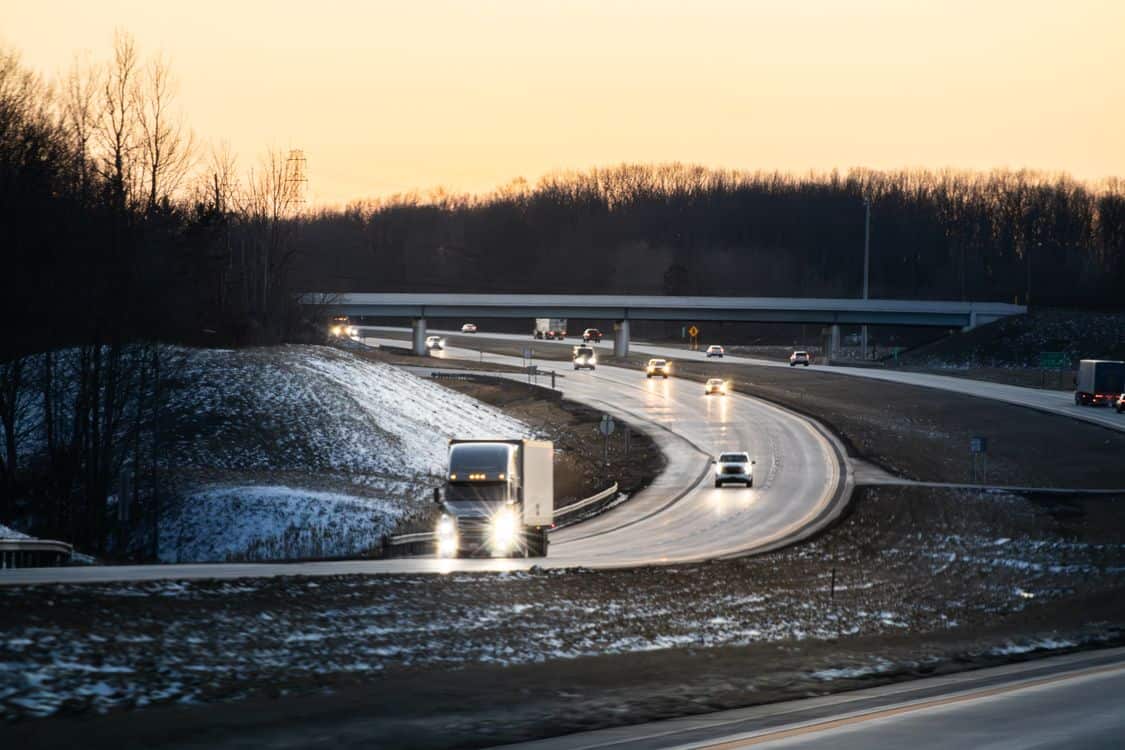
Austin’s traffic patterns make rapid response harder than the mileage alone would suggest. MoPac and I-35 congestion can turn a fifteen-mile trip between a damaged roof in East Austin and one in Westlake into an hour-plus drive during peak periods, even before accounting for the aftermath of a storm, when downed limbs and standing water frequently close secondary roads. None of that shows up on a standard drive-time estimate.
Effective crews handle this by clustering jobs geographically rather than working a simple first-call, first-served queue. A tarp-and-inspect run through a hard-hit Round Rock subdivision, followed by a separate loop through Westlake’s hill-country streets, tends to outperform crews zigzagging across the metro chasing calls in the order they arrived.
Material staging adds another layer. Underlayment, decking, and shingle deliveries have to be pre-positioned near the anticipated damage zone, because storm season strains the same regional supply chains that every other contractor in Central Texas is drawing from at the same time.
Communication systems have to keep pace with the routing itself. Crews working scattered addresses across a hundred-square-mile service area depend on real-time updates about which streets are passable, which jobs have shifted priority, and which homeowners have already been contacted, since a missed update can send a truck to a job that was already handled by someone else.
Sequencing Emergency Tarps Against Permanent Repairs
Not every storm call requires the same response speed, and sorting that out under time pressure is its own logistical discipline. A roof with active leaking after a storm needs a same-day tarp to prevent interior water damage, while a roof with cosmetic hail bruising and no active leak can typically wait for a scheduled inspection days later.
This triage process typically happens over the phone within minutes of a homeowner’s call, often before a crew has physically seen the property. Dispatchers rely on a short set of questions, whether there’s active water intrusion, whether the damage is visible from the ground, whether trees or debris are involved, to sort incoming requests into the right queue almost immediately.
Crews that triage well tend to separate their workforce into two functions during an active event: a smaller, fast-moving emergency tarp team and a larger inspection and estimating team that follows behind. That split lets a company protect the most vulnerable homes immediately without stalling the broader queue of less urgent requests.
The sequencing problem doesn’t end there. Insurance adjusters, permit offices, and material suppliers all get backlogged simultaneously after a widespread event, and a roofing company’s internal routing decisions in the first 48 hours often determine how far behind that backlog puts them for weeks afterward.
Weather itself adds a final complication to the sequencing problem. Central Texas storm cells often arrive in clusters rather than isolated events, meaning a crew still finishing tarp work from one system can find a second round of severe weather moving through before the first wave of repairs is complete, forcing constant re-triage of an already stretched schedule.
None of this logistical strain is visible to a homeowner staring at a stained ceiling, and that gap in visibility is part of what makes the aftermath of a storm so frustrating for everyone involved. A company’s internal routing decisions, made quickly and often with incomplete information, end up shaping how quickly any individual household actually gets help.